 KitGuru KitGuru.net – Tech News | Hardware News | Hardware Reviews | IOS | Mobile | Gaming | Graphics Cards


Our main test involves using an X-Rite i1 Display Pro Plus colorimeter and utilising Portrait Display's Calman Ultimate software. The device sits on top of the screen while the software generates colour tones and patterns, which it compares against predetermined values to work out how accurate the screen is.
The results show:
- A monitor’s maximum brightness in candelas or cd/m2 at various levels set in the OSD.
- A monitor’s contrast ratio at various brightness levels in the OSD.
- Gamut coverage, primarily focusing on sRGB and DCI-P3 colour spaces.
- Greyscale accuracy, measured across 20 shades, with an average colour balance reported.
- The exact gamma levels, with a comparison against preset settings in the OSD.
- The colour accuracy, expressed as a Delta E ratio, with a result under 3 being fine for normal use, and under 2 being great for colour-accurate design work.
We first run these tests with the display in its out-of-the-box state, with all settings on default. If there is an sRGB emulation option or other useful mode then we may test that too. We then calibrate the screen using the Calman Ultimate software and run the tests again.
You can read more about our test methodology HERE.
Default settings
Brightness and Contrast (Full Screen)
| OSD Brightness | White Luminance (cd/m2) | Black Luminance (cd/m2) | Contrast Ratio |
| 0% | 55.2 | 0.019 | 2862:1 |
| 25% | 139.5 | 0.048 | 2916:1 |
| 50% | 221.5 | 0.076 | 2914:1 |
| 75% | 297.9 | 0.102 | 2921:1 |
| 100% | 371.6 | 0.127 | 2918:1 |
Kicking off with brightness testing, we can see the monitor range from 55 nits up to 372 nits for a full screen white – AOC claims up to 450 nits, so our testing is a little below that figure, but it's still passable in 2025. Contrast is actually slightly higher than AOC claimed 2500:1 ratio, given we saw it hovering around 2900:1, so a good bit higher than your typical IPS panel, which we would expect from a VA monitor.
Uniformity
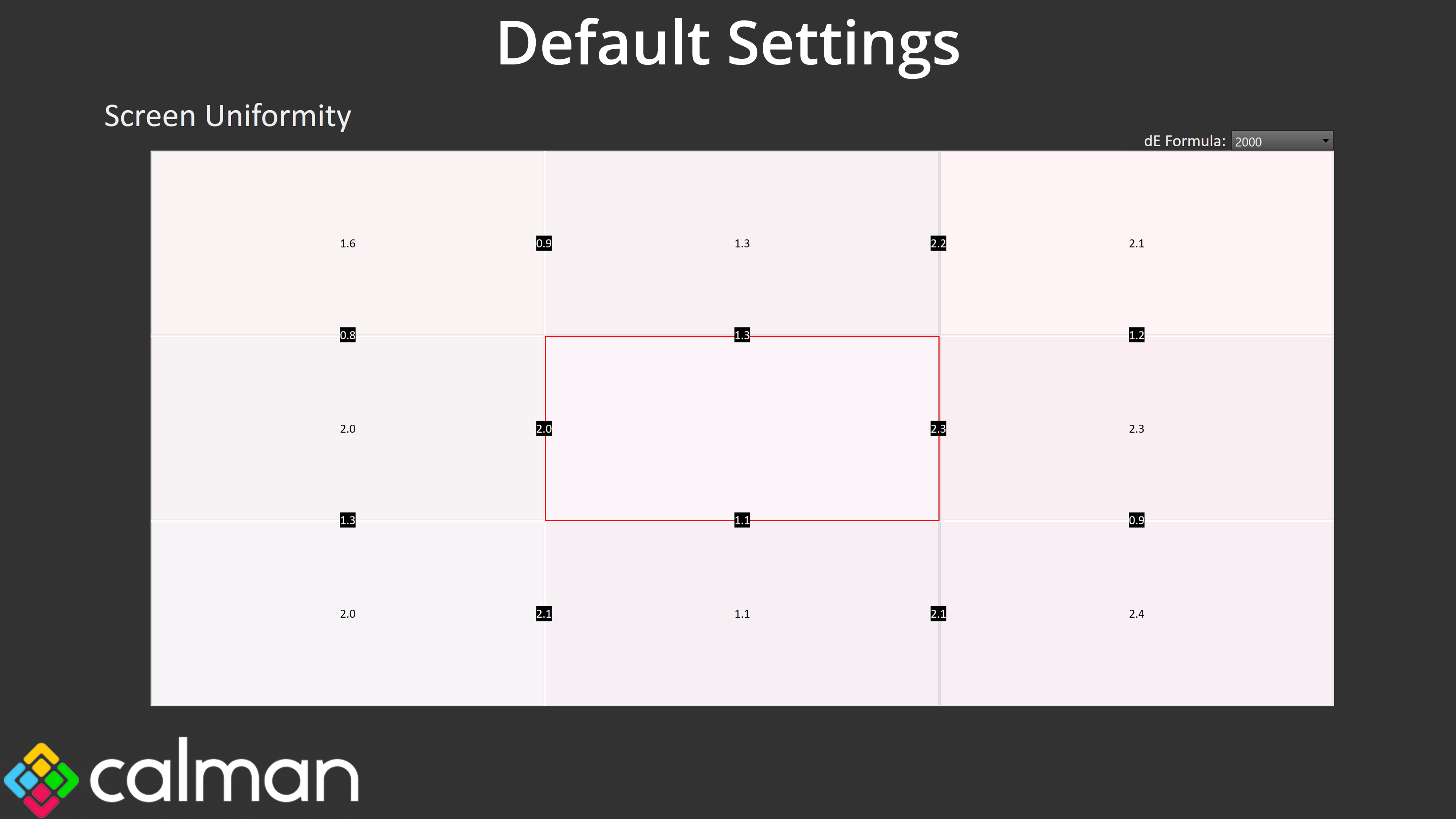
Screen uniformity is a new addition to our test suite – or rather, it has been reinstated after some viewer feedback. This test asks us to split the monitor into a 3×3 grid and measure the white balance of each section. The numbers reported are the deltaE figures relative to the very centre of the display, with lower being better. The results here are certainly nothing to worry about – there is some deviation across the panel, but the highest reading didn’t exceed a deltaE 2000 of 2.4 and it wasn’t something I noticed in day to day use, so that’s definitely a good thing.
Gamut (CIE 1976)
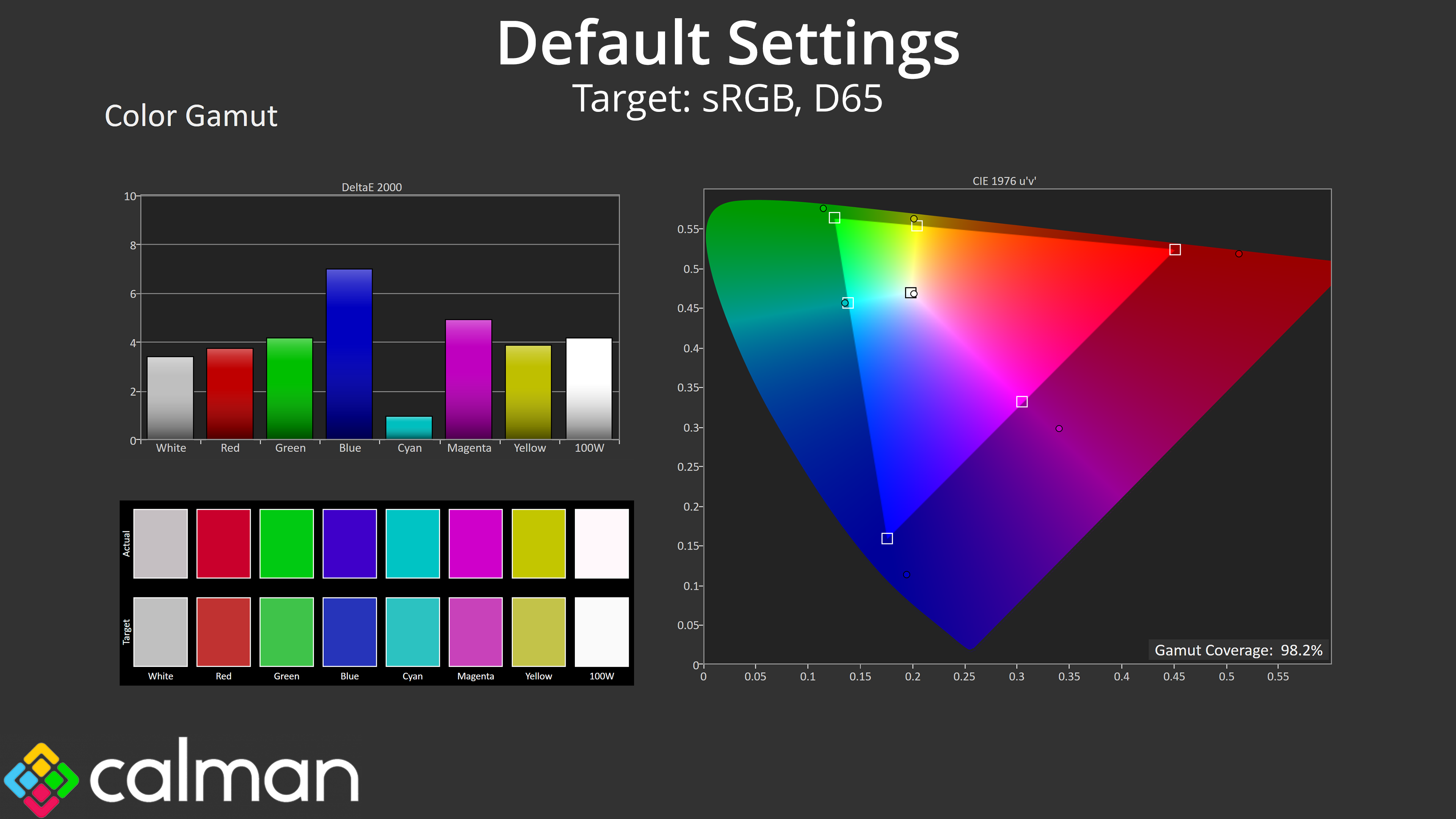
| Colour space | Coverage (%) |
| sRGB | 98.2 |
| DCI-P3 | 91.6 |
| Adobe RGB | 86.5 |
| Rec.2020 | 76.5 |
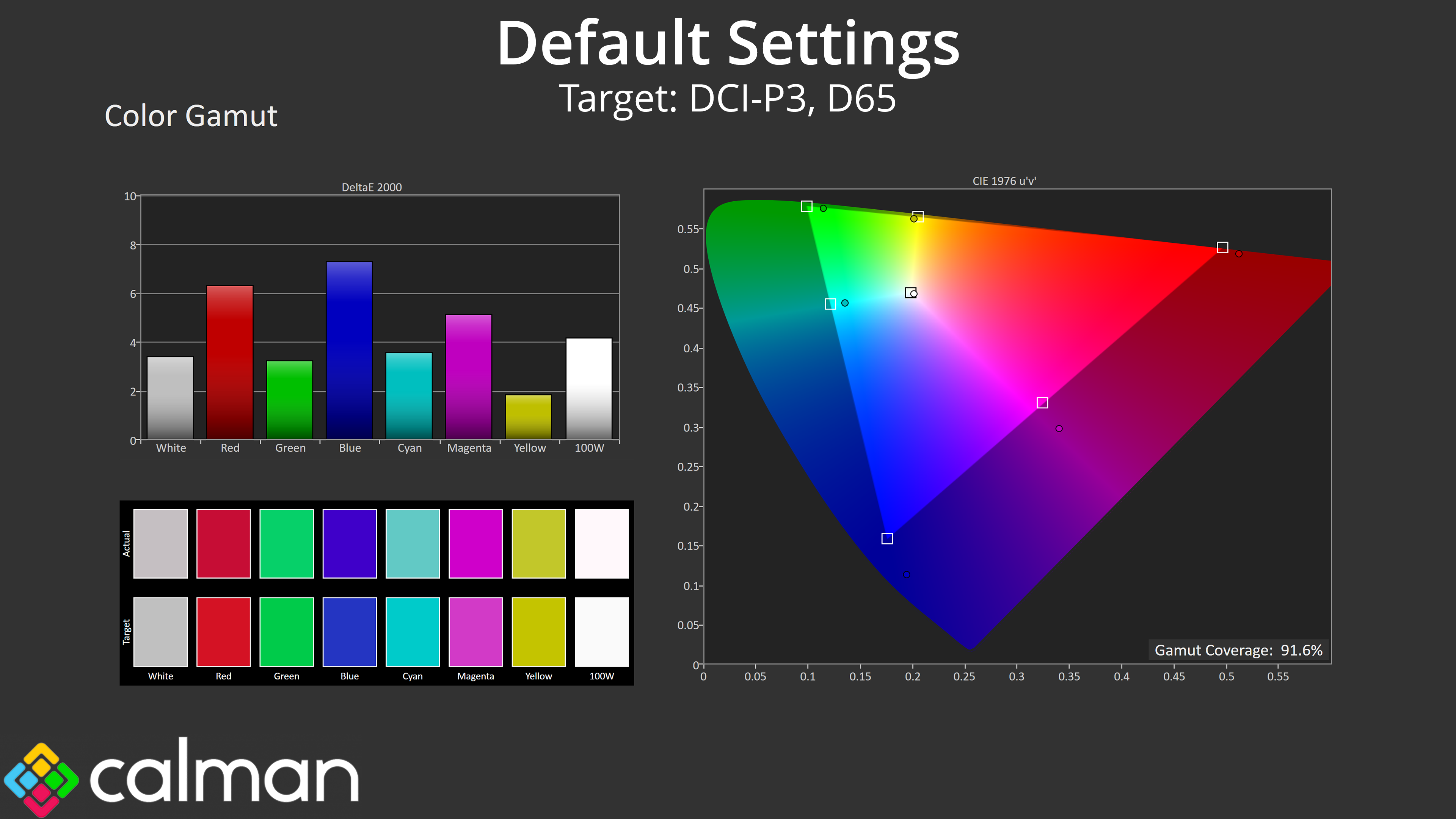
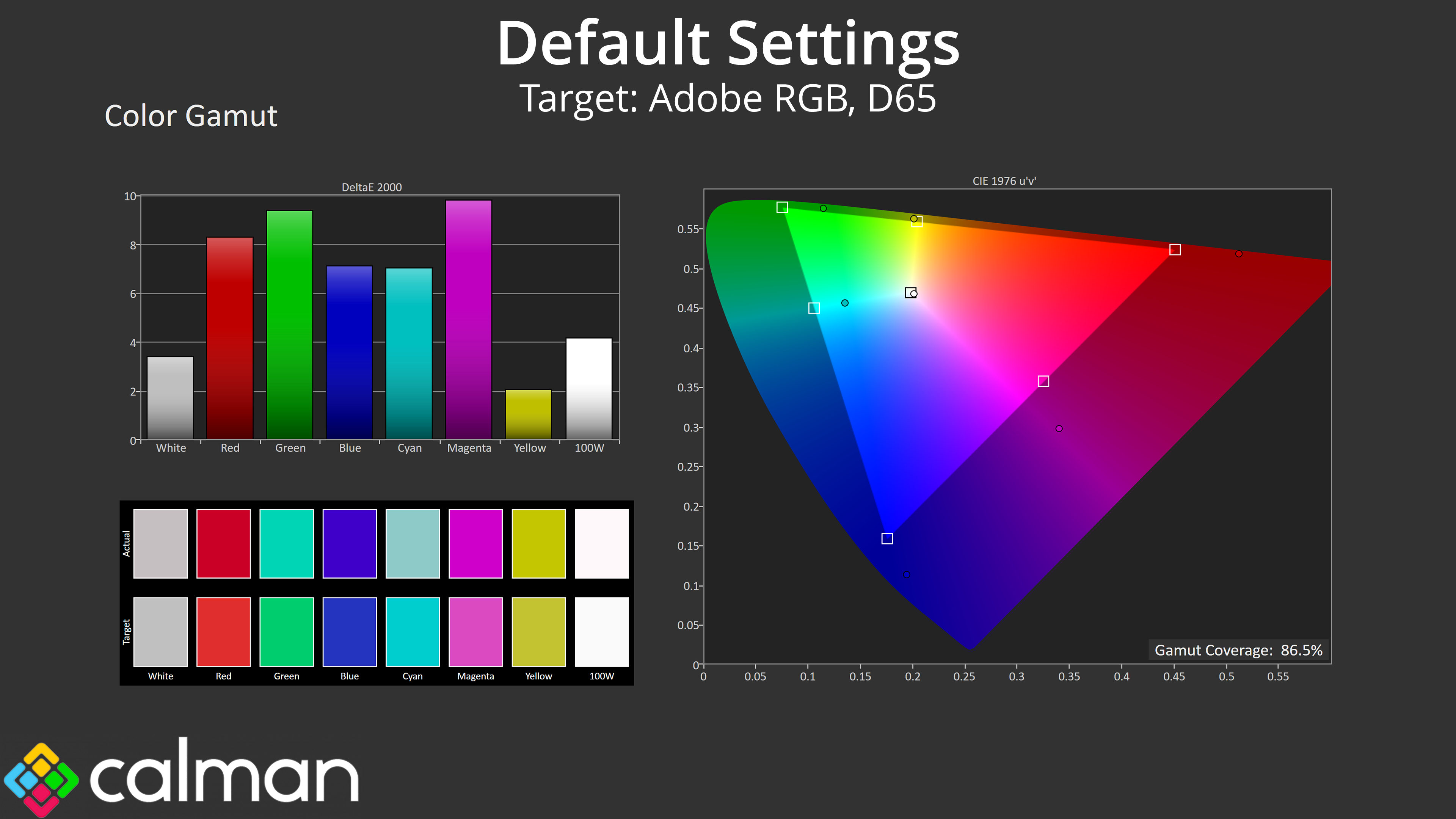
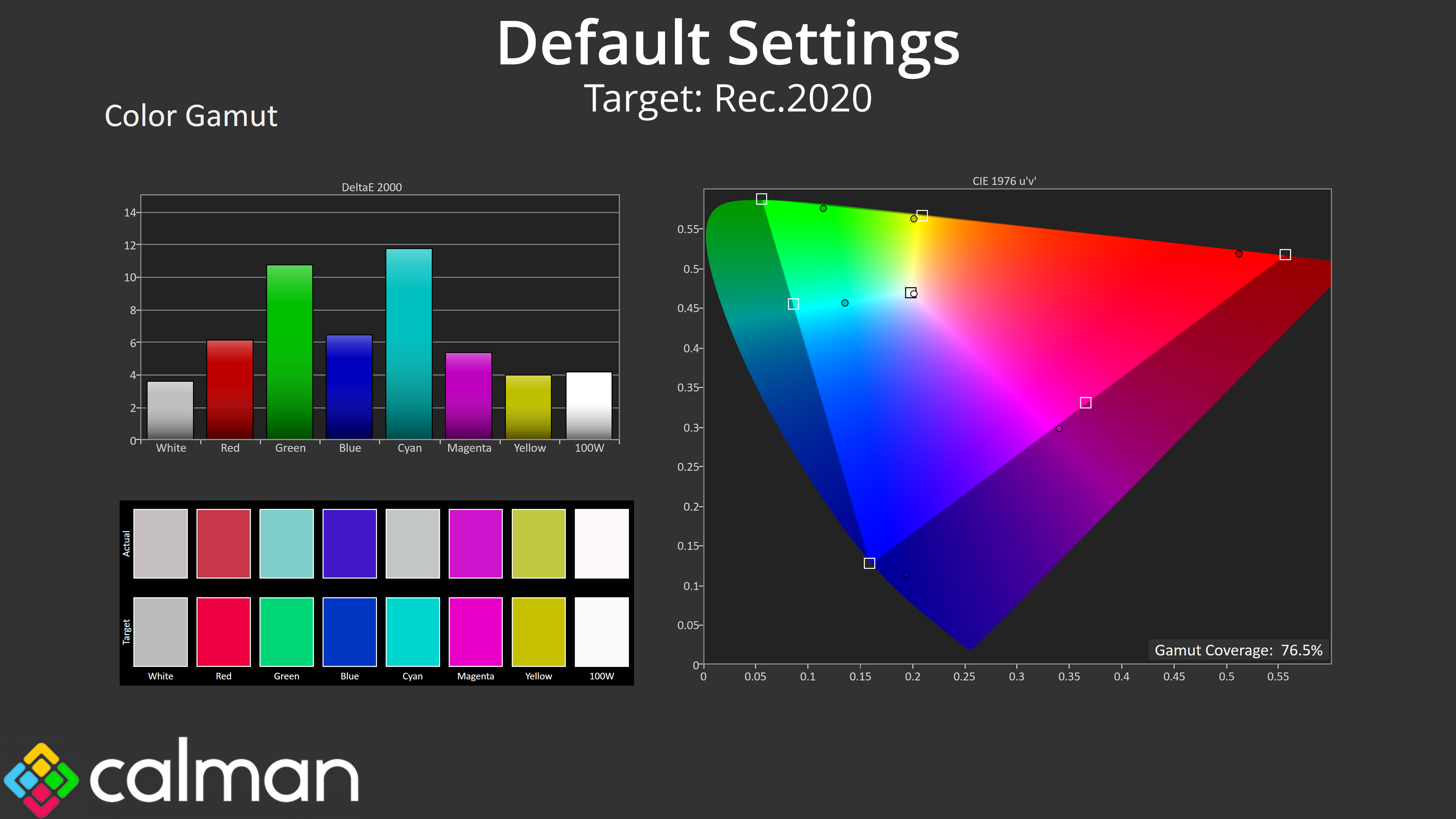
Gamut is also fairly wide, generally surpassing the sRGB space and offering 91.6% DCI-P3, 86.5% Adobe RGB and 76.5% Rec.2020 coverage.
Greyscale
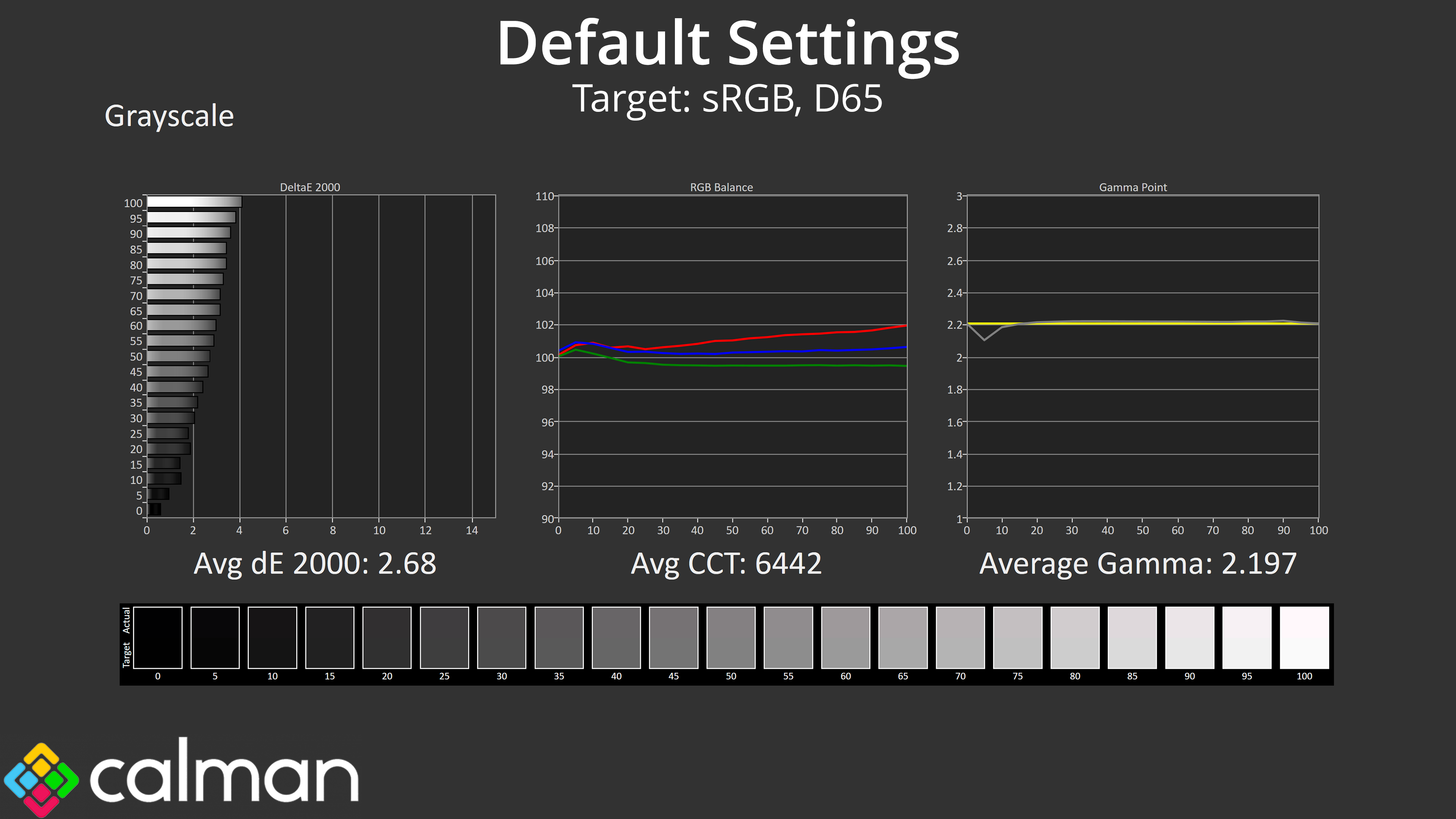
I’m pleased to say factory calibration is solid, too. Default colour balance is very good, averaging 6442K – you can see the red channel is slightly stronger than the others, giving just the faintest of warm tints, but it’s hardly noticeable unless you were directly comparing to a reference colour balance. Gamma is basically flawless, too, hugging the 2.2 target incredibly closely. That results in a greyscale deltaE 2000 of 2.68, not bad at all for a monitor at this price.
Saturation
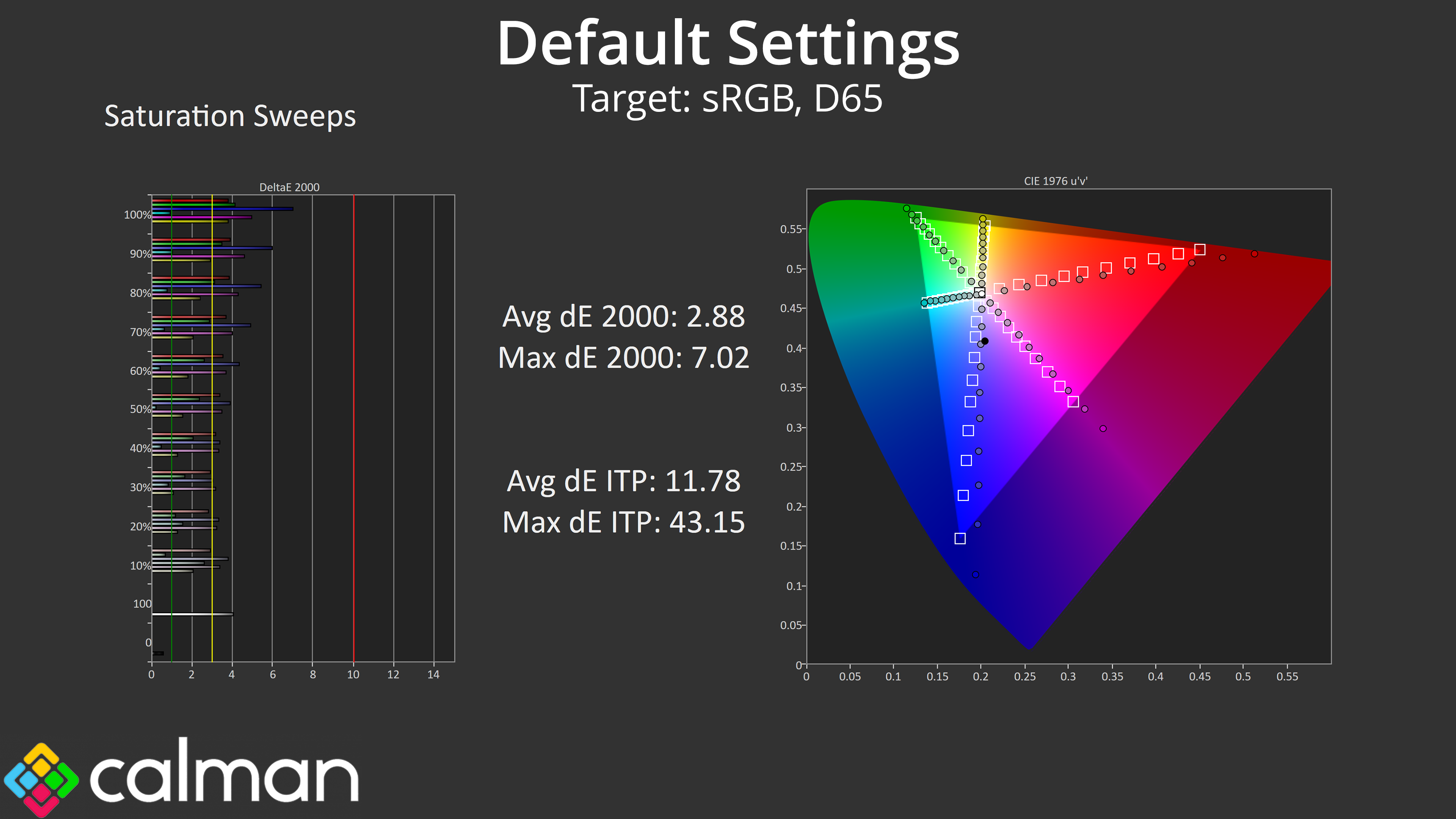
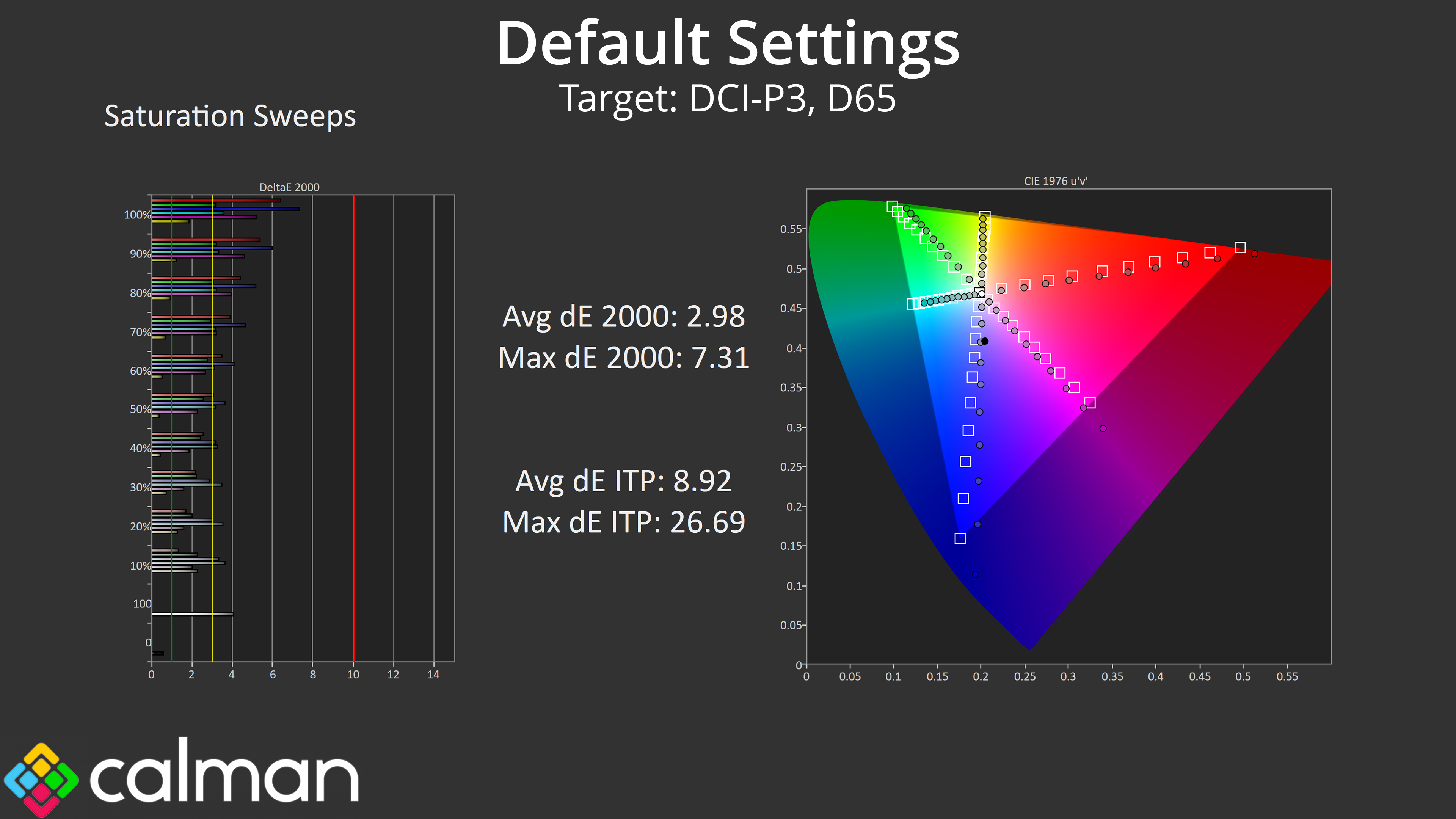
Saturation sweeps do show a degree of inaccuracy due to the unclamped gamut, and overall behaviour is similar regardless if you are targeting the sRGB or DCI-P3 spaces.
Colour Accuracy
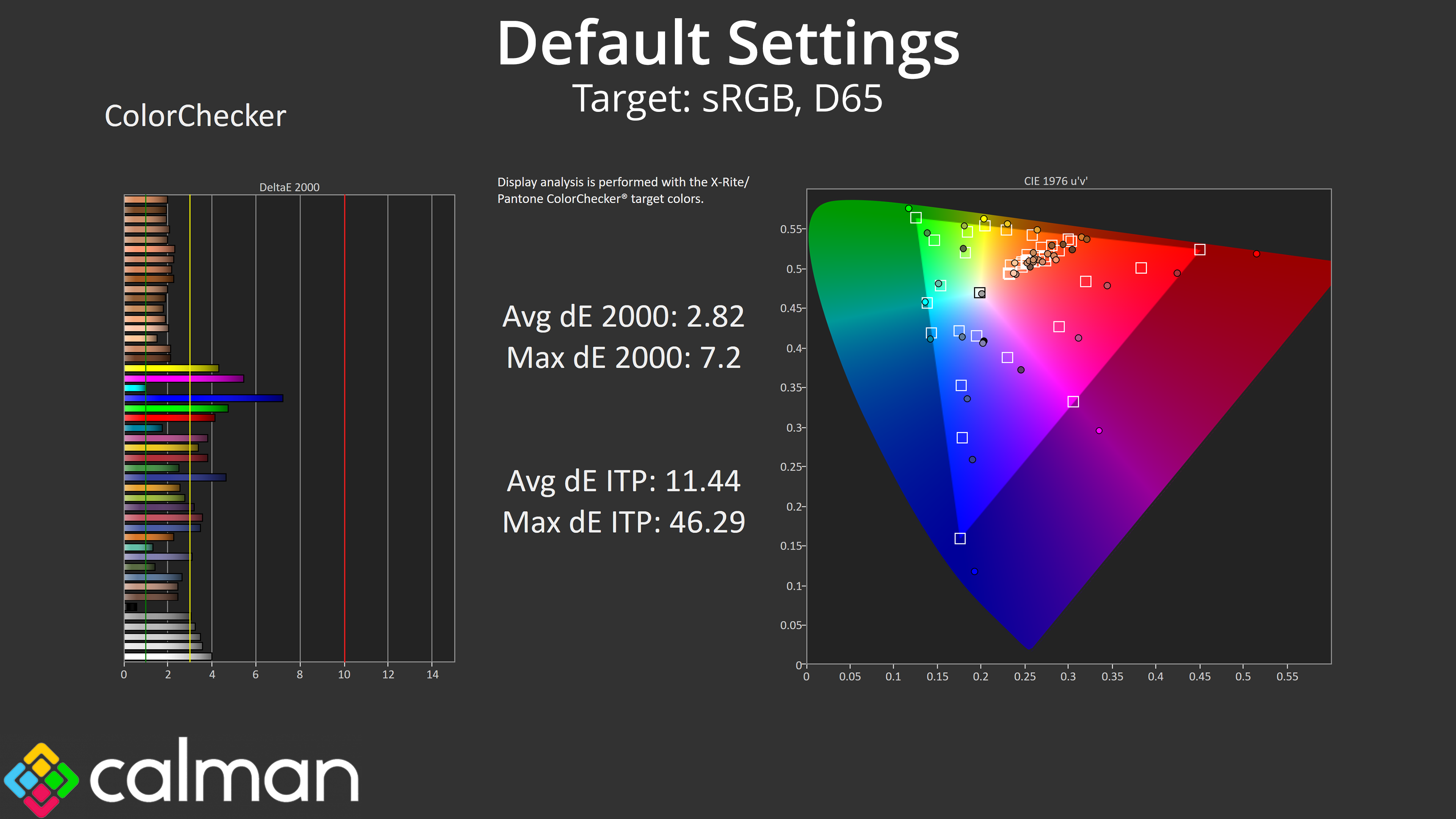
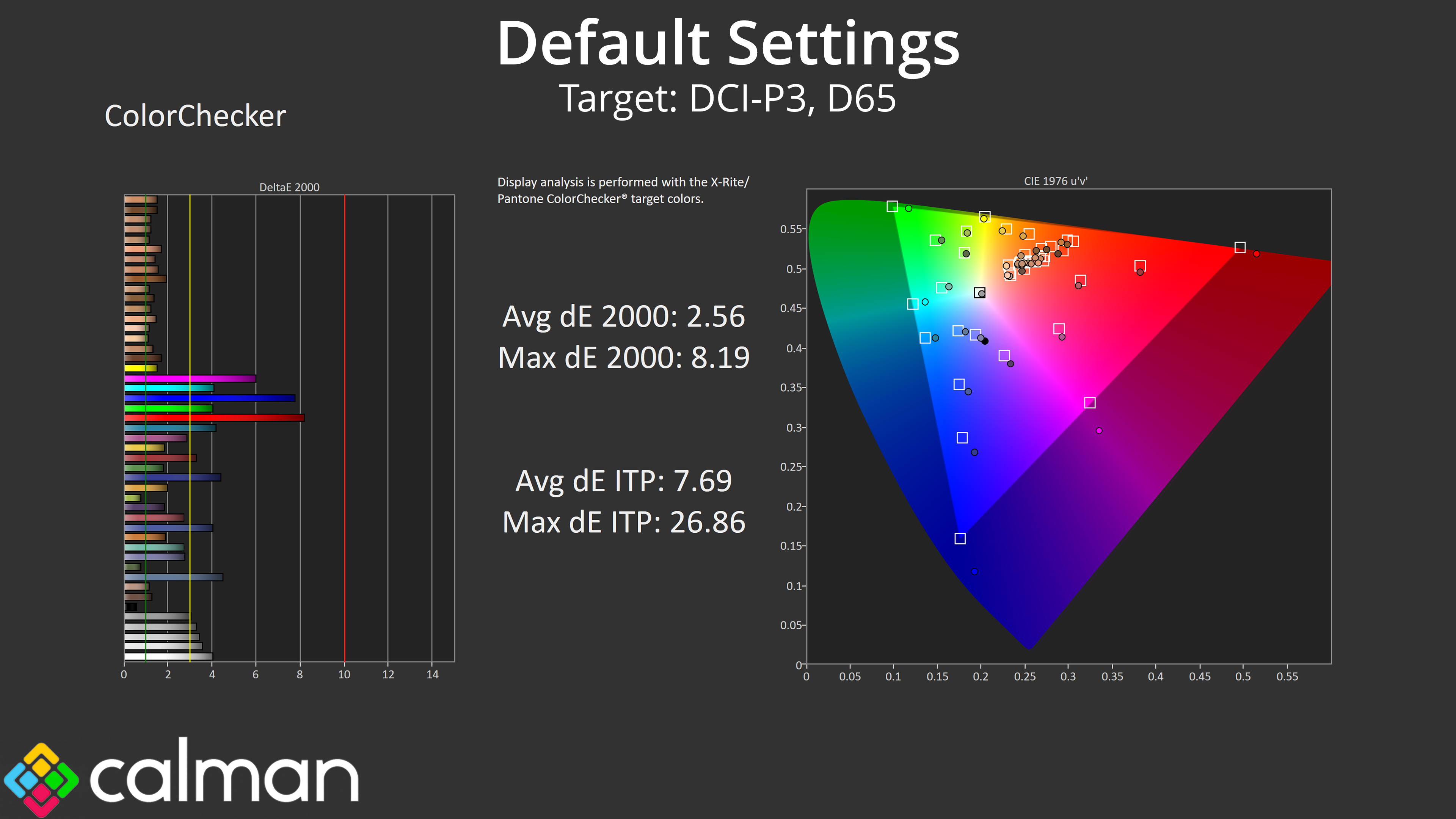
Colour accuracy tells a similar story, too, with the oversaturation leading to some inaccuracy, evident when looking at the 100% blue and magenta channels, though overall accuracy is still decent, averaging a deltaE 2000 of 2.56 relative to the DCI-P3 space.
sRGB Emulation Mode
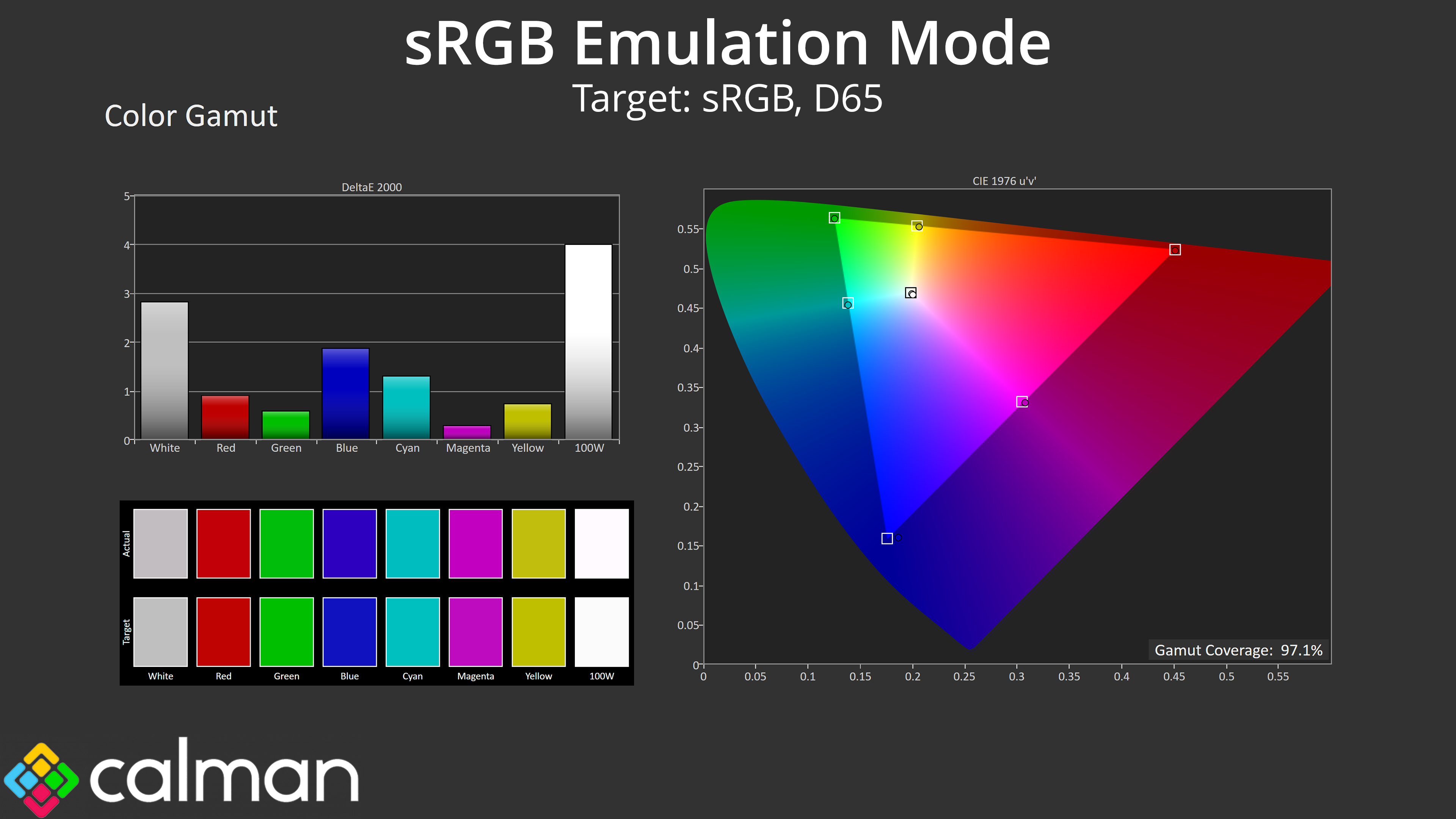
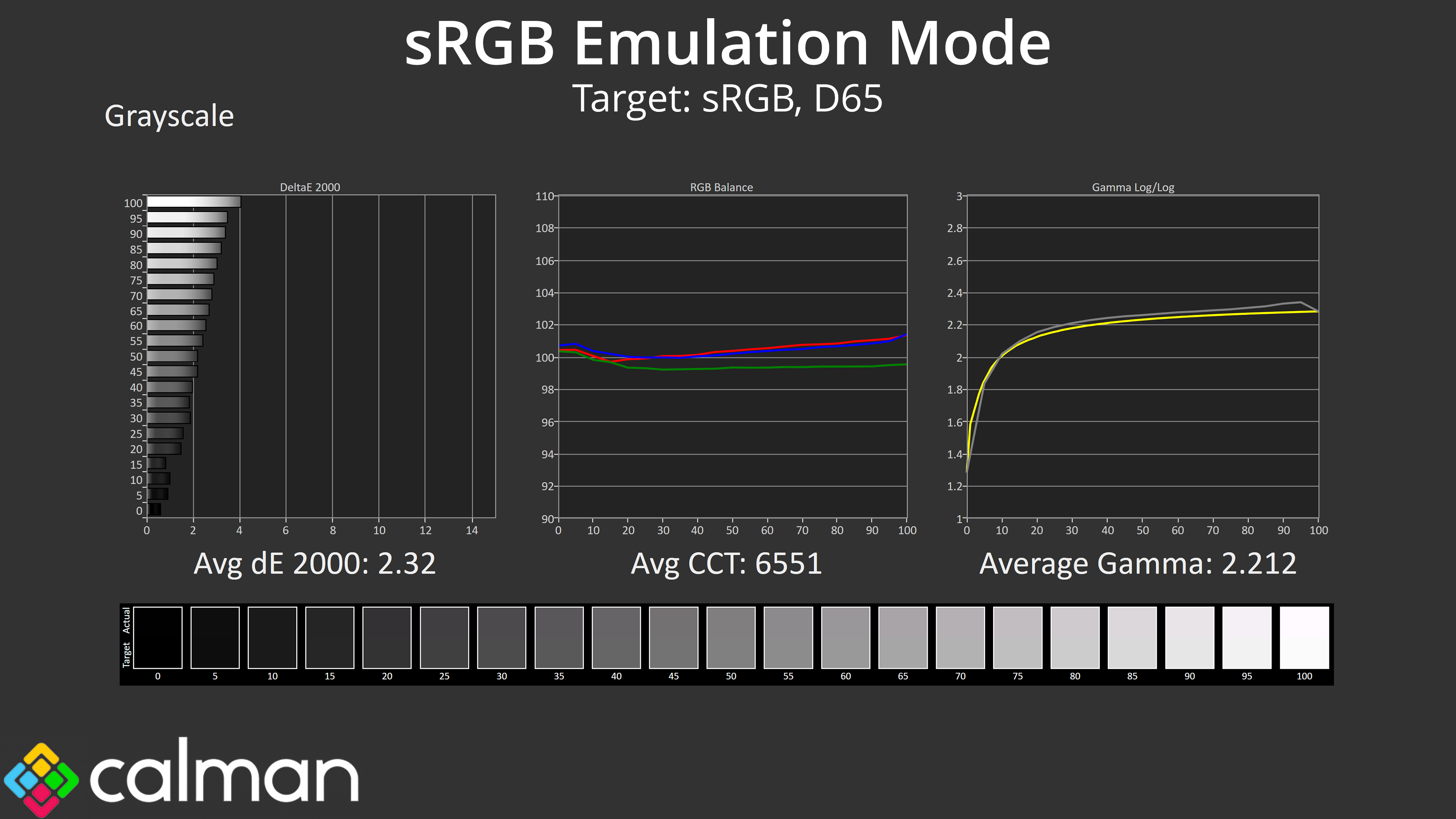
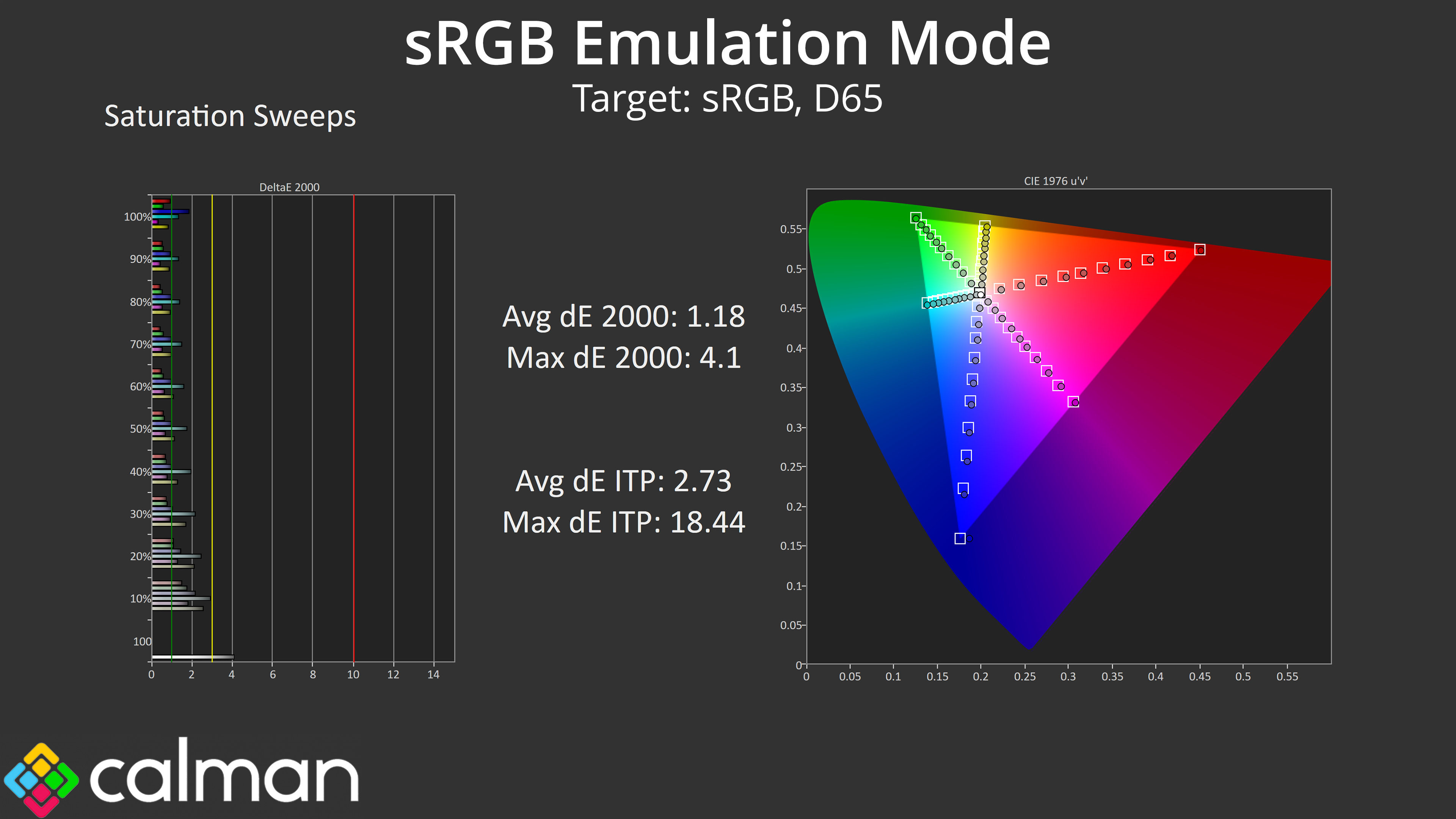
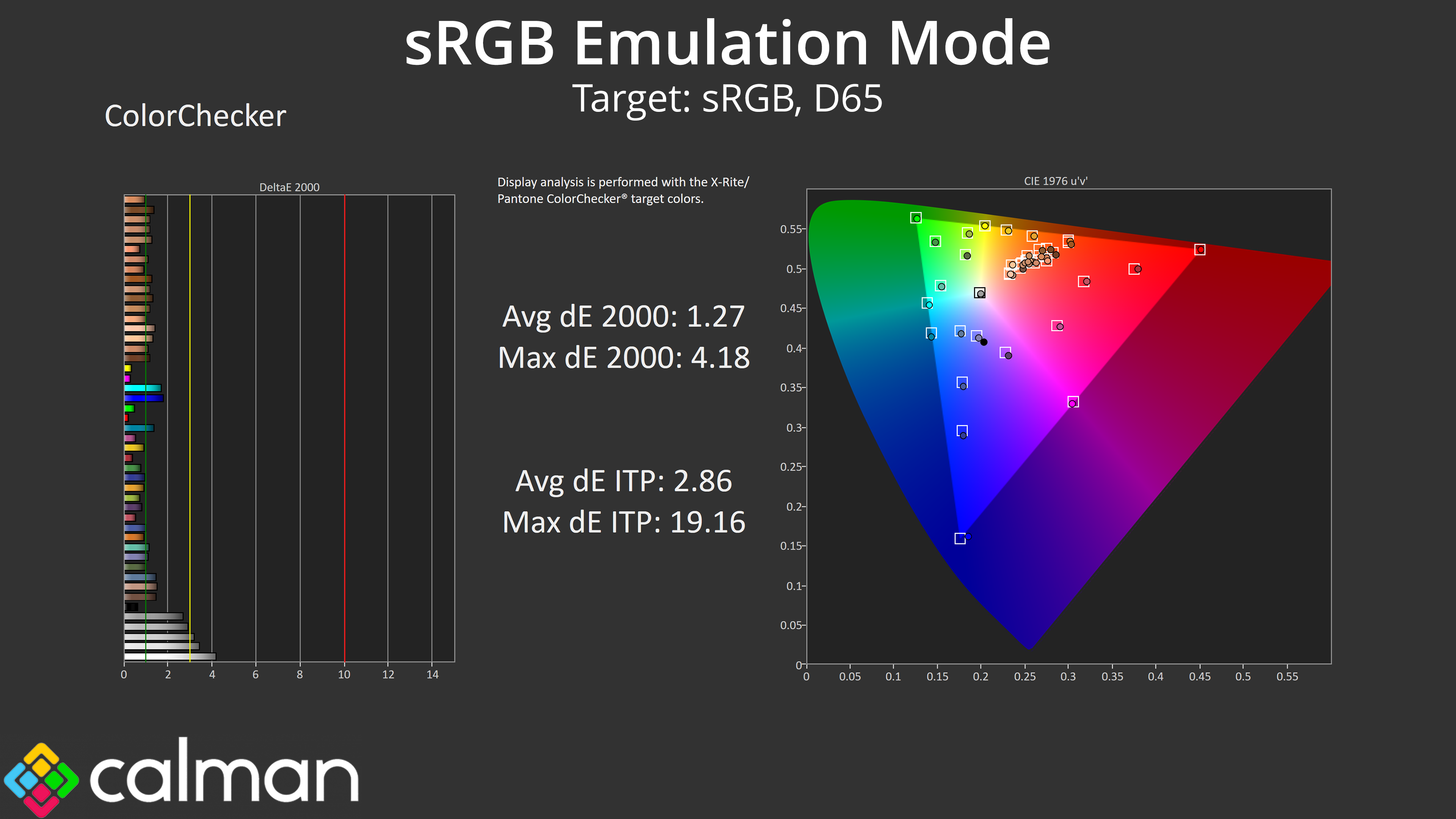
There is a colour space toggle in the OSD to enable sRGB emulation though, and this does a good job at clamping the gamut to prevent oversaturation. It also delivers a slight improvement to colour balance, while gamma tracking remains near-flawless. As such, we see much improved saturation and colour accuracy average deltaEs, with both sets of results hovering just a little over 1.1, indicating high levels of accuracy – so good job AOC for that.
Calibrated Results
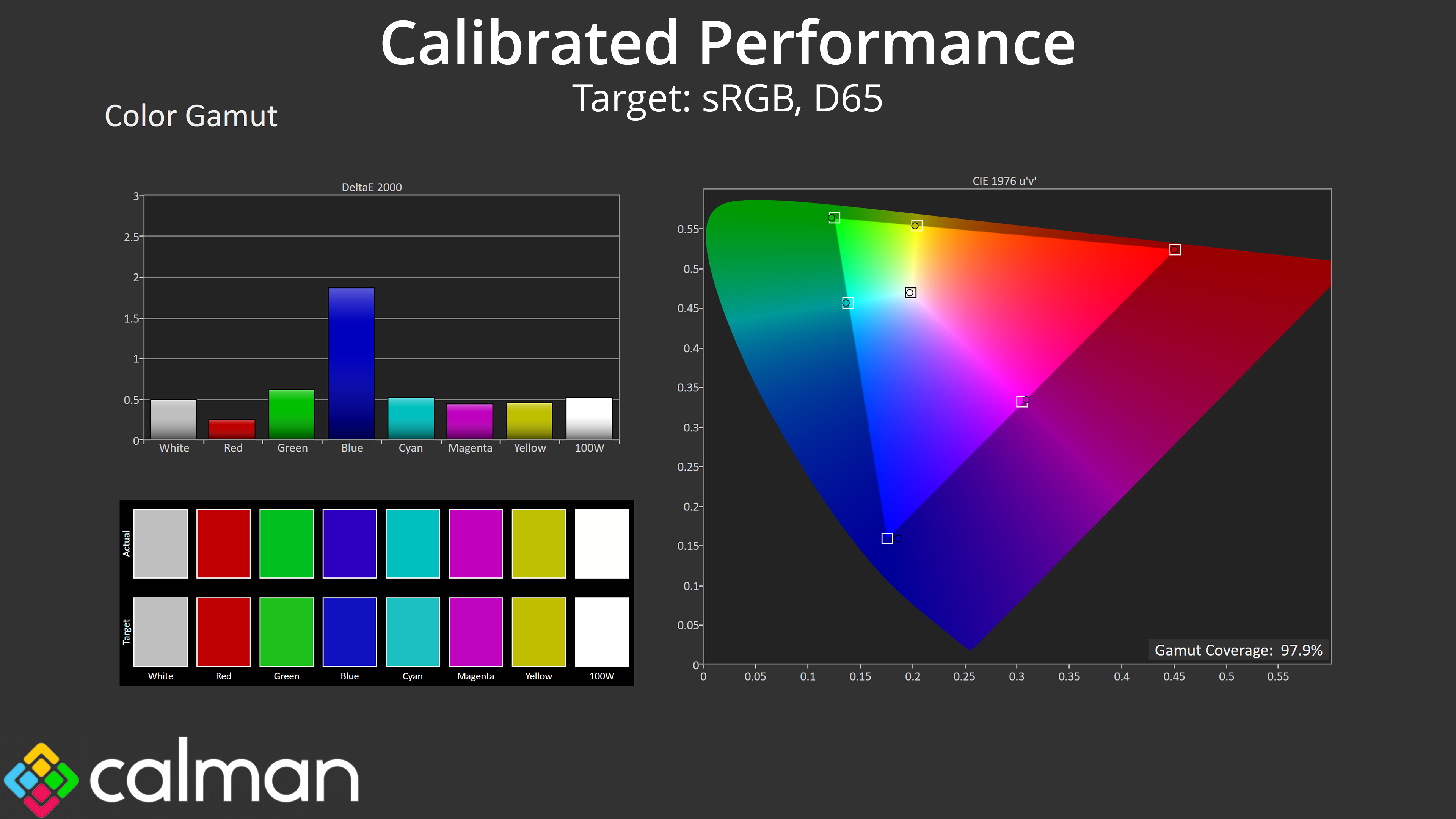
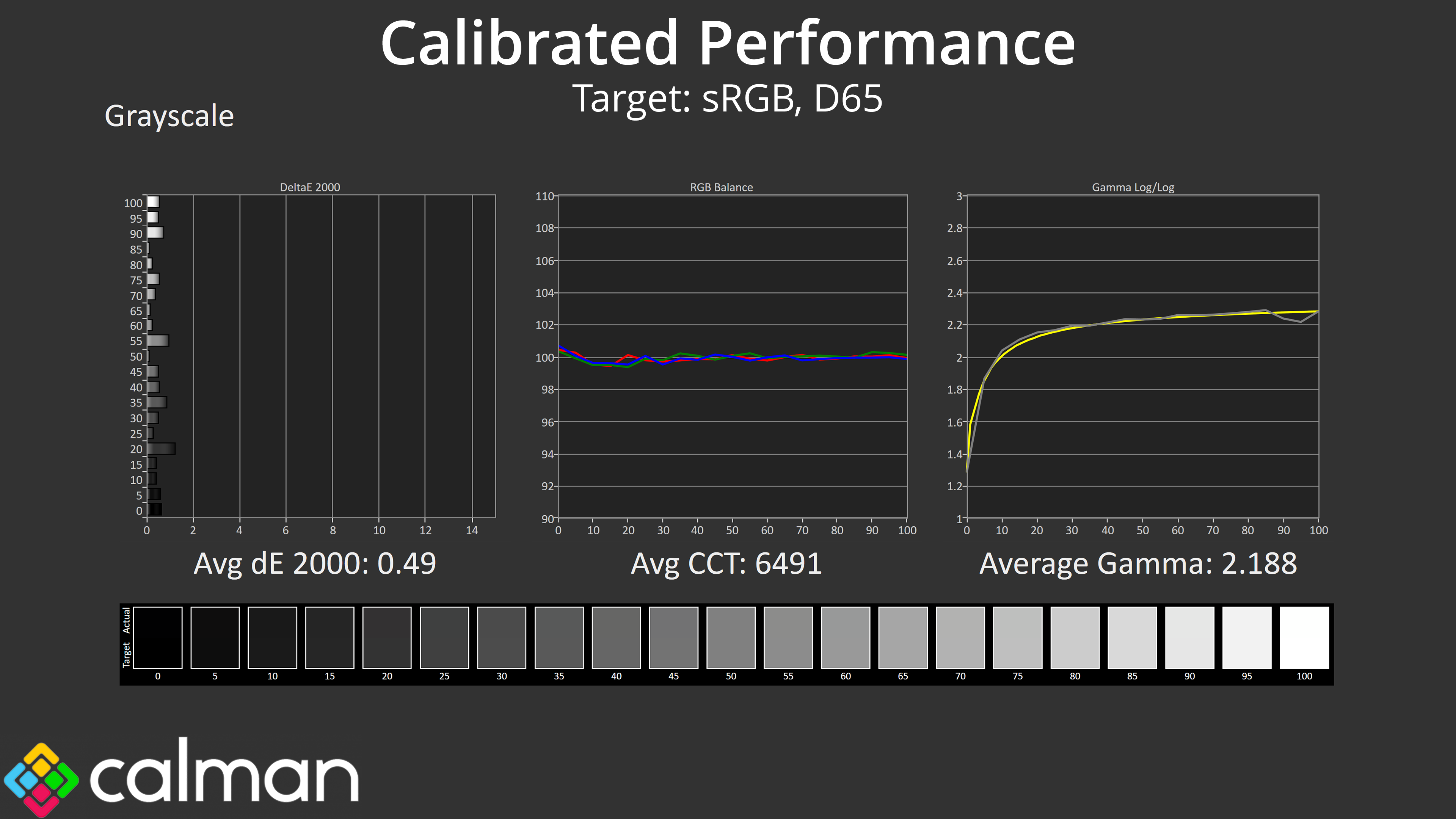
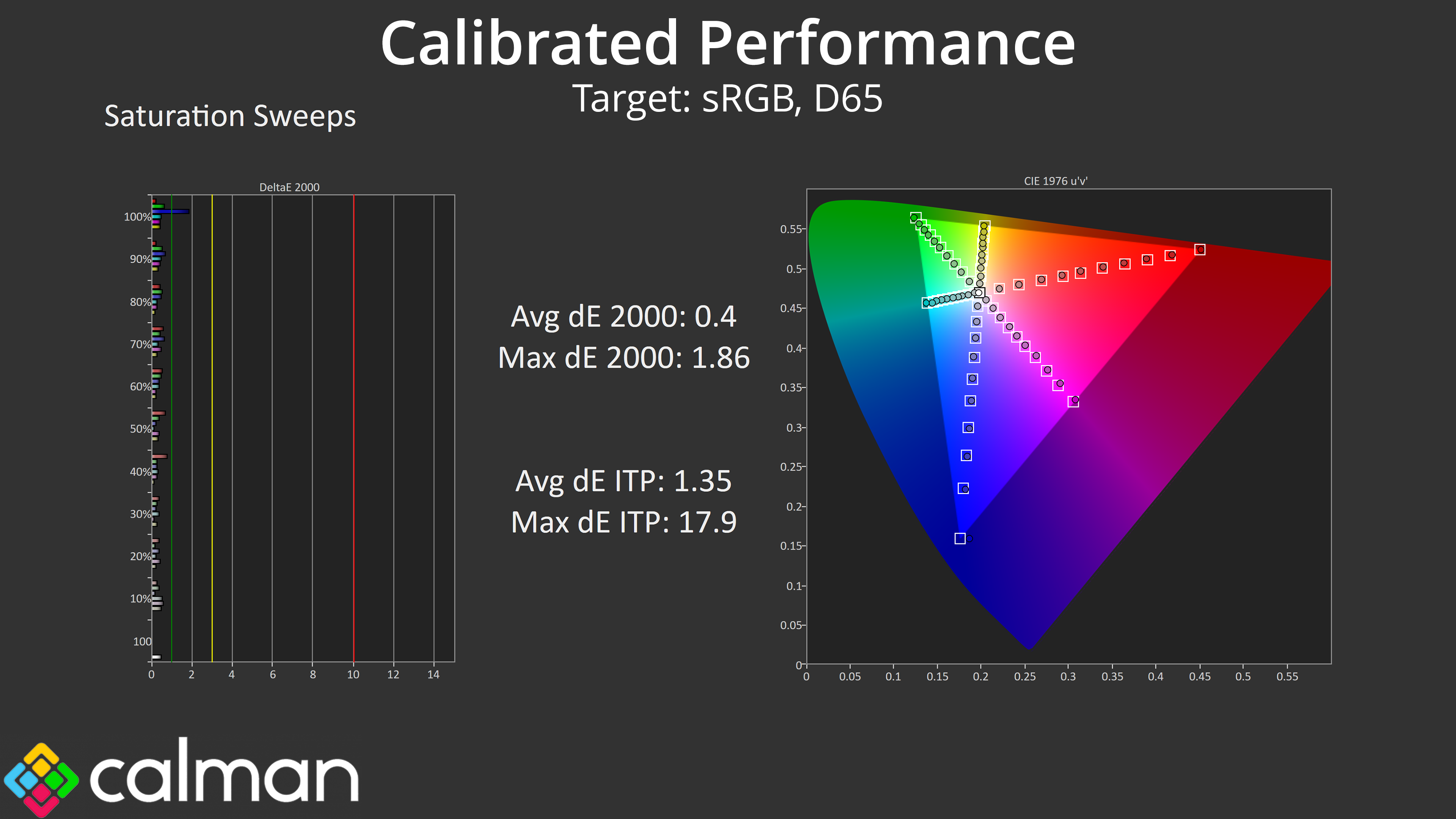
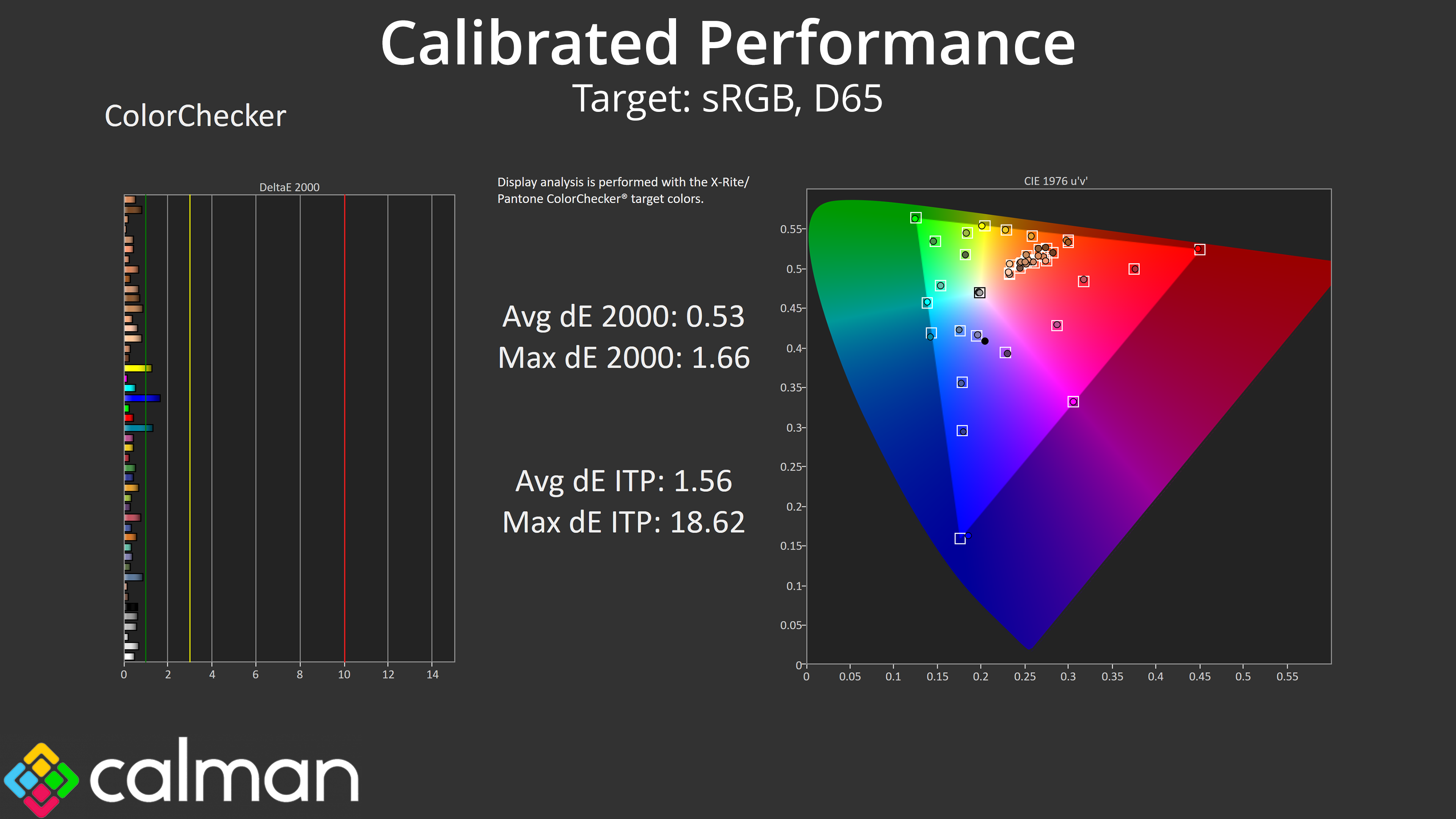
Lastly, I did also do a full calibration – perhaps not a realistic scenario for a £280 gaming monitor, but the results do go to show what is possible if you have the required software and hardware tools. Though I’d wager the sRGB mode is good enough for 99% people who end up using this monitor!