 KitGuru KitGuru.net – Tech News | Hardware News | Hardware Reviews | IOS | Mobile | Gaming | Graphics Cards


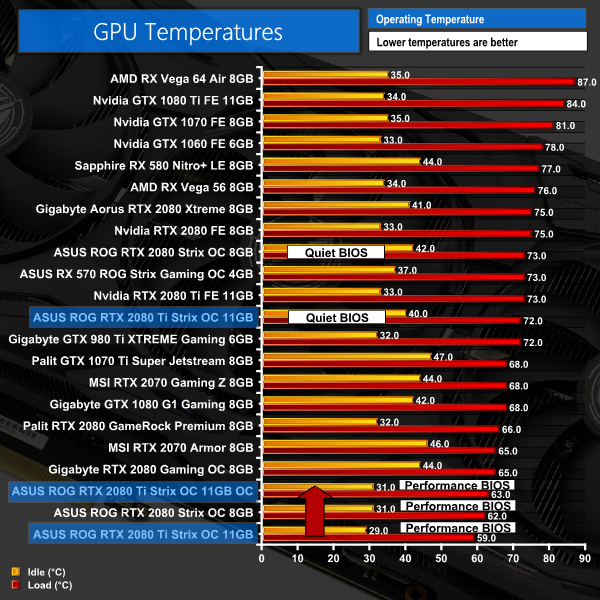
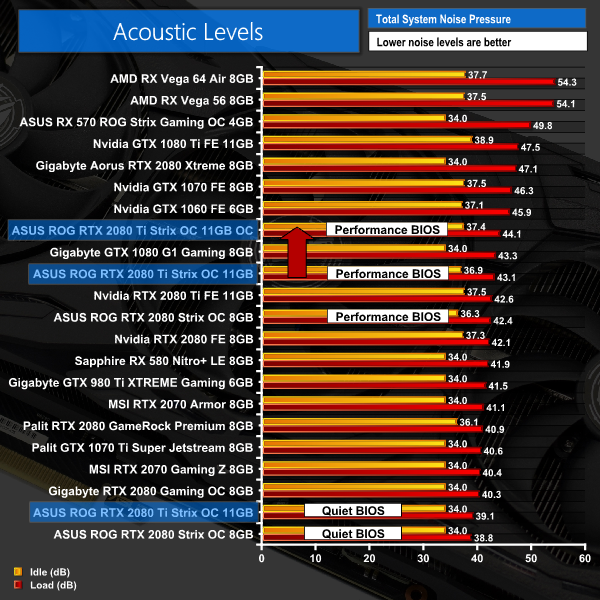
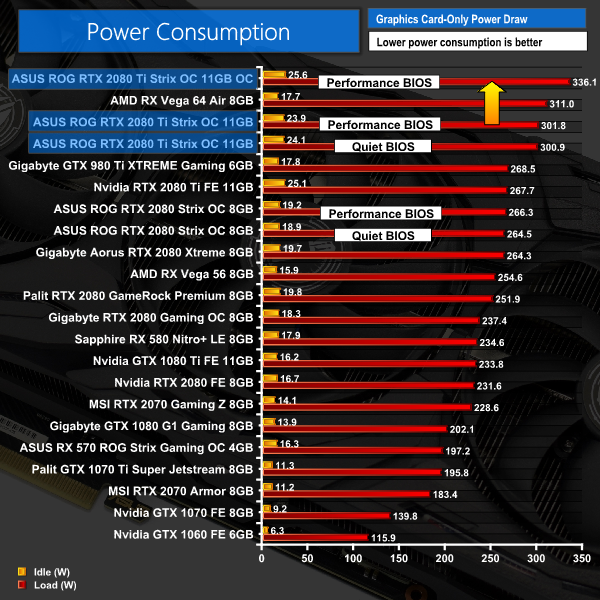
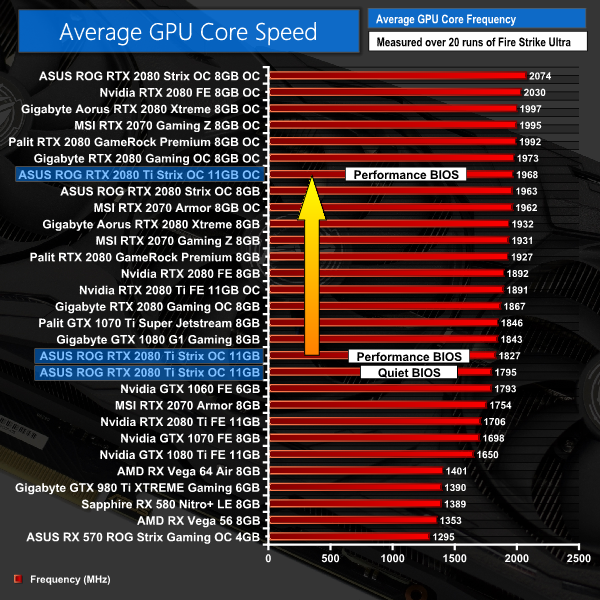
Here, we take a further look at the impact of our overclock, looking at the increased temperatures, acoustics, power draw, and lastly, the effect had on the average clock speed.
Temperatures
Acoustics
Power consumption
Average clock speed under load
Overview
As expected, this card does run both hotter and louder when overclocked. The GPU core increased 4C, from 59C to 63C, but we have to remember that is still one of the coolest resulted we have seen, even with an overclock applied. Noise levels only rose 1dB, too, which is not that noticeable in the real world. If we look at power consumption, this jumped up 35W or so – taking it past stock Vega64 – but again, that is not a big concern for me.
We did see an average clock speed of almost 1970MHz, too, meaning a real-world gain of about 140MHz from our overclock – certainly a good result, and we can see the tangible effect it had on our game benchmarks on the previous page.